
Porsche PDK Service Guide: Recommended Maintenance Schedule and Tips
Modern Porsche vehicles are engineered for precision, performance, and driving engagement, and the transmission plays a central role in delivering that experience. For models equipped with Porsche’s dual-clutch system, understanding proper care is essential to long-term reliability.
The famous Porsche transmission, known as the Porsche Doppelkupplungsgetriebe (PDK), showcases German engineering heritage and innovation. This German-designed system is celebrated for its quick, seamless gear changes and high efficiency, making it a benchmark in high-performance automotive technology.
The PDK concept was originally developed for motorsport applications, with its roots dating back to 1964. However, it was not until the early 1980s, under the guidance of Rainer Wüst, that the PDK started to become a serious option for Porsche. The system was first tested in the Porsche 944 Turbo and later in the iconic Porsche 956, where legendary drivers noted significantly faster gear changes on the track. Designed specifically for racing, the PDK was engineered to deliver some of the fastest shifts automatic transmissions are capable of, cementing its reputation in motorsport and performance circles.
In this guide, we will explain what Porsche PDK is, how this advanced transmission operates, and outline a recommended Porsche PDK maintenance schedule designed to help owners protect performance, prevent costly repairs, and extend the life of their vehicle.
What Is Porsche PDK?
Before discussing maintenance, it is important to understand what is Porsche PDK.
PDK stands for Porsche Doppelkupplungsgetriebe, which translates to “Porsche double-clutch transmission.” It is a high-performance 7- or 8-speed automatic gearbox engineered to deliver lightning-fast gear changes without interrupting power delivery.
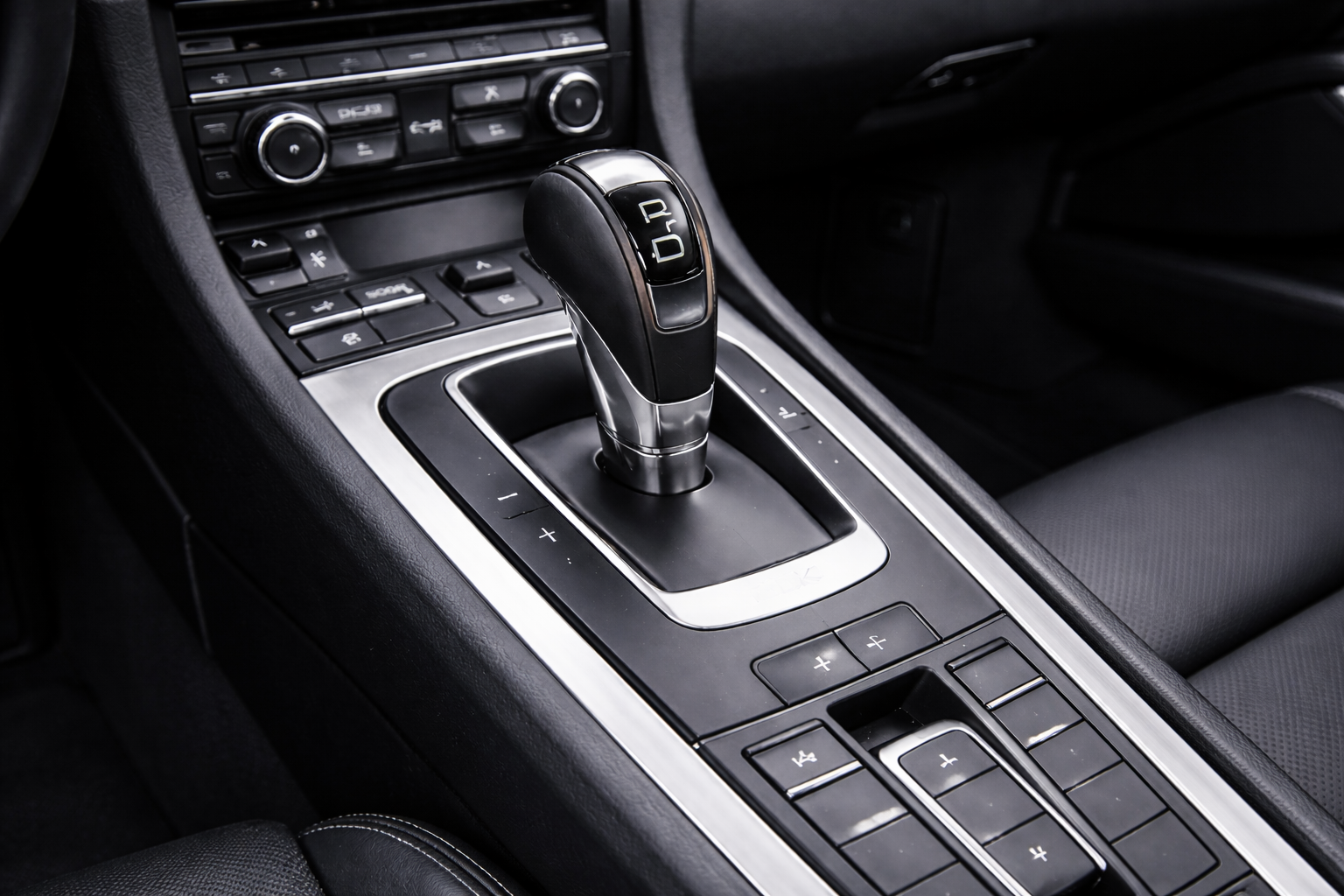
Essentially, Porsche PDK uses two clutches to operate like two manual gearboxes in parallel. One clutch is dedicated to the odd gears, while the other manages the even gears. This dual-clutch setup allows the transmission to pre-select the next gear—so while one gear is engaged, the next (odd or even) is already ready. This enables seamless, rapid shifts that improve acceleration response, efficiency, and overall driving dynamics by optimizing how the transmission interacts with the engine.
Manual compared to PDK, the advantages are clear: PDK delivers faster shift speeds and acceleration than a manual transmission, while still allowing for manual gear changes using paddle shifters for an engaging driving experience. The PDK is offered alongside a 6-speed manual on most Porsche models, such as the 911, Cayman, and Panamera. In fact, every 2020 combustion engine Porsche model except the Cayenne has a PDK option. Manual transmissions offer higher engagement and are prized by enthusiasts—often commanding a premium in the used market due to their rarity—but are generally slower in shift speeds than PDK. The PDK unit does add about 84 lbs compared to a manual in some models.
Because the system is highly engineered and performance-focused, proper maintenance is essential.
Why Porsche PDK Maintenance Is Critical
The Porsche PDK transmission is a sophisticated piece of engineering that relies on:
Specialized high-heat-resistant, shear-stable fluid
Precisely controlled hydraulic pressure
Mechatronic control systems
Integrated filtration components
Over time, heat cycles, clutch material wear, and normal mechanical friction degrade transmission fluid. If the fluid breaks down, it can compromise clutch performance, shift quality, and internal component protection.
Routine maintenance helps:
Prevent premature clutch wear
Maintain smooth shifting performance
Reduce internal contamination
Protect the mechatronic unit
Extend overall transmission life
Porsche PDK Recommended Maintenance Schedule
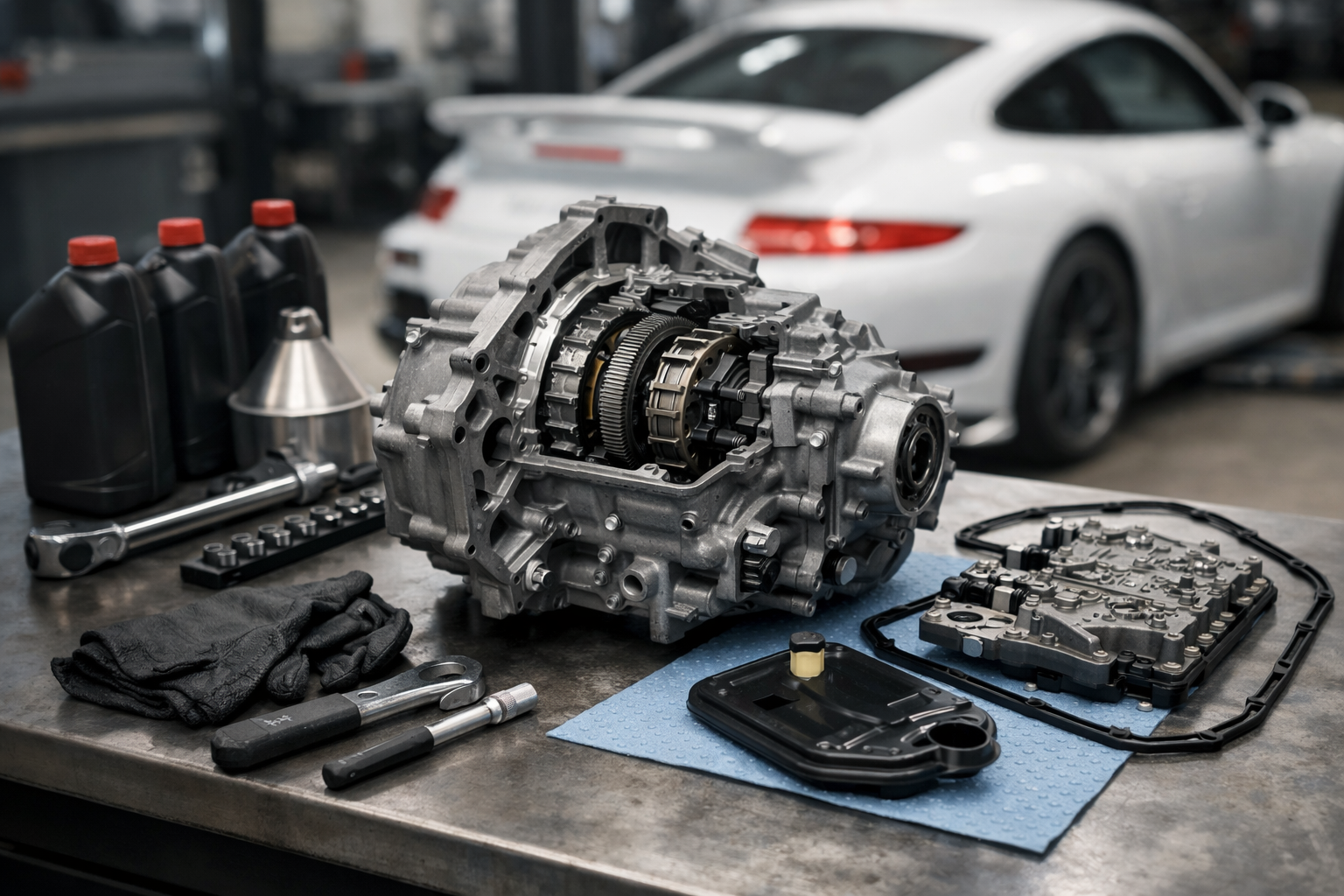
One of the most common questions we hear is about proper service intervals.
Factory Recommendation
Porsche’s official interval for many models is:
120,000 miles or 12 years
However, this interval is widely considered conservative and may not reflect real-world driving conditions.
Specialist Recommendation
Independent Porsche specialists generally recommend servicing Porsche PDK transmissions every:
40,000 to 60,000 miles, or
Every 4 to 6 years
This proactive interval helps prevent premature wear and maintains optimal performance.
Performance or Track Driving
If you frequently drive aggressively or track your Porsche, fluid degradation happens faster. In these cases, more frequent service is strongly advised to protect the transmission under high-heat conditions.
What Is Included in a Porsche PDK Service?
A proper Porsche PDK service is more involved than a simple fluid drain and refill.
1. PDK Clutch Oil Replacement
The clutch oil lubricates and cools the dual-clutch assembly. It must be replaced with Porsche-approved, high-performance fluid designed for extreme heat and shear stability.
2. Gear Oil / Differential Oil Replacement
The gear set and differential require fresh oil to ensure proper lubrication and protection against wear.
3. PDK Oil Filter and Pan Replacement
Unlike conventional transmissions, the PDK filter is integrated into the oil pan. This means:
The entire pan must be replaced
New fasteners are typically required
Proper sealing and torque procedures must be followed
Replacing the integrated filter ensures contaminants are removed from the system.
Critical Service Procedures and Technical Requirements
Proper Porsche PDK service requires more than just mechanical skill. It requires precision.
Using factory-level diagnostic tools is essential to determine the exact cause of any PDK transmission issues.
Temperature-Specific Fluid Filling
The transmission fluid must be filled and measured at a very specific temperature range:
30°C to 50°C (86°F to 122°F)
Diagnostic software is required to monitor transmission temperature during the fill process. Incorrect temperature can lead to:
Underfilling
Overfilling
Shift irregularities
Internal damage
This is why professional service at a Porsche specialist is highly recommended.
Cooling Systems and Transmission: Protecting Your PDK from Overheating
The Porsche dual clutch transmission (PDK) is a marvel of engineering, designed to deliver lightning-fast gear changes and exceptional performance in Porsche models like the Porsche 911 and Porsche Panamera. To maintain this high level of performance and efficiency, the PDK transmission relies heavily on a robust cooling system.
Porsche vehicles equipped with the PDK gearbox use a combination of air and liquid cooling to regulate transmission temperatures, with some models featuring dedicated auxiliary radiators specifically for the PDK. This advanced cooling setup is essential, especially in high-performance driving scenarios or hot climates, where excessive heat can quickly build up within the transmission.
Overheating is a serious concern for the PDK transmission. Unlike a manual gearbox, the Porsche PDK transmission uses electronic controls, hydraulic systems, and sensitive sensors to manage gear changes and clutch pack engagement. If the cooling system is compromised, it can lead to issues such as gear disengagement, warning lights, or even permanent damage to the clutch packs and internal components—resulting in costly repairs.
To protect your PDK transmission, regular maintenance of the cooling system is just as important as routine fluid changes. Porsche recommends periodic inspections of the cooling system, ensuring that coolant levels are correct, radiators are clean and unobstructed, and all sensors are functioning properly. This is especially critical for drivers who frequently use automatic mode in heavy traffic or push their Porsche to its limits on the track.
Drivers can also take proactive steps to reduce the risk of overheating. Avoiding extreme temperatures, monitoring the transmission temperature display (if equipped), and allowing the car to warm up before spirited driving all help maintain optimal operating conditions. If you notice any signs of overheating—such as warning messages or erratic shifting—it’s crucial to address the issue immediately to prevent further damage to the PDK transmission and its high-performance components.
Ultimately, a well-maintained cooling system ensures that your Porsche PDK transmission continues to deliver the seamless, high-performance driving experience Porsche vehicles are known for. By prioritizing cooling system care and being mindful of driving conditions, Porsche owners can help safeguard their dual clutch transmission and enjoy many miles of reliable, exhilarating performance.
Warning Signs Your Porsche PDK May Need Service
Even if you are within the official interval, your vehicle may show signs that service is needed sooner.
Watch for:
Rough or jerky shifting
Hesitation during acceleration
Whining or unusual noises during gear changes
Delayed engagement when shifting from Park to Drive or Reverse, where the transmission may fail to engage as expected
Transmission fault messages
Unresponsive gears after driving for 10–20 minutes is a common issue with Porsche PDK transmissions. The 'Emergency Run' warning can disable performance functions and limit gear use to protect the transmission. High transmission temperatures may trigger gear disengagement or PDK warning lights. Subtle issues with the PDK can escalate quickly, so early diagnosis is important.
If something goes wrong, Porsche's official position is that the PDK is not serviceable and recommends complete transmission replacement. Accurate writing and documentation of symptoms is crucial for proper diagnosis and repair.
If you experience any of these symptoms, scheduling a diagnostic inspection promptly can prevent more extensive damage.
Tips to Extend the Life of Your Porsche PDK Transmission
To maximize longevity and performance:
Follow a 40,000–60,000 mile service interval
Avoid excessive launch control use
Allow the vehicle to warm up before aggressive driving
Service more frequently if you track the car
Address warning signs immediately
Proactive maintenance is significantly less expensive than major transmission repairs.
Independent Porsche Specialists in Ventura County
At Speedhaus Automotive in Newbury Park, we specialize exclusively in Porsche service and repair. As independent Porsche specialists, we provide factory-recommended maintenance for Porsche PDK transmissions using the proper diagnostic equipment, temperature-controlled fill procedures, and manufacturer-approved fluids.
Our technicians understand the precision engineering behind Porsche systems and follow the correct service protocols to ensure optimal performance and reliability. Whether your vehicle needs routine PDK maintenance, diagnostic evaluation, or performance-focused service, we deliver dealership-level expertise with personalized, independent care.

Schedule Your Porsche PDK Service At Speedhaus Automotive in Newbury Park
Your Porsche was built to perform at the highest level, and maintaining your Porsche PDK transmission is key to preserving that performance. Whether you are approaching the 40,000 to 60,000 mile service range or experiencing shifting concerns, proactive maintenance can prevent larger issues down the road.
If you are a Porsche owner in Ventura County, contact Speedhaus Automotive in Newbury Park today to schedule your Porsche transmission repair service or diagnostic appointment. Our experienced team is here to provide factory-recommended maintenance and specialized care to keep your Porsche driving exactly as it was engineered to.
FAQs
-
A Porsche PDK transmission uses two separate clutches to control alternating gear sets. While one gear is engaged, the next gear is already pre-selected, allowing for nearly instantaneous shifts. This design improves acceleration, efficiency, and overall driving performance.
-
Although some factory intervals suggest service at 120,000 miles or 12 years, most Porsche specialists recommend servicing the PDK every 40,000 to 60,000 miles or every 4 to 6 years. More frequent service is advised for vehicles driven aggressively or on the track. Regular maintenance helps prevent premature wear and costly repairs.
-
Yes, Porsche PDK transmissions require specialized, high-heat-resistant, shear-stable fluid engineered specifically for dual-clutch systems. Using incorrect fluid can lead to improper shifting, overheating, or internal damage. Professional service ensures the correct fluid is used and filled at the proper temperature.
-
The cost of Porsche PDK service typically ranges from $850 to $1,900 at a dealership, depending on the model. Independent Porsche specialists often perform the same factory-recommended service at a more competitive range of $850 to $1,200. Pricing may vary based on fluid capacity and model-specific requirements.