
How Long Do Porsche Carbon Ceramic Brakes Last in Real-World Driving?
Porsche carbon ceramic brakes are often viewed as the pinnacle of braking technology—lightweight, high-performance, and engineered for extreme conditions. But for many Porsche owners, especially those driving on public roads rather than race tracks, one important question comes up quickly:
How long do Porsche carbon ceramic brakes actually last in real-world driving?
In this guide, we’ll break down what carbon ceramic brakes are, why Porsche uses them, how long they realistically last on the street and track, and what real-world data tells us about ownership expectations. We’ll also touch on track use considerations and finish with how we support Porsche owners here at Speedhaus Automotive in Newbury Park.
What Are Porsche Carbon Ceramic Brakes?
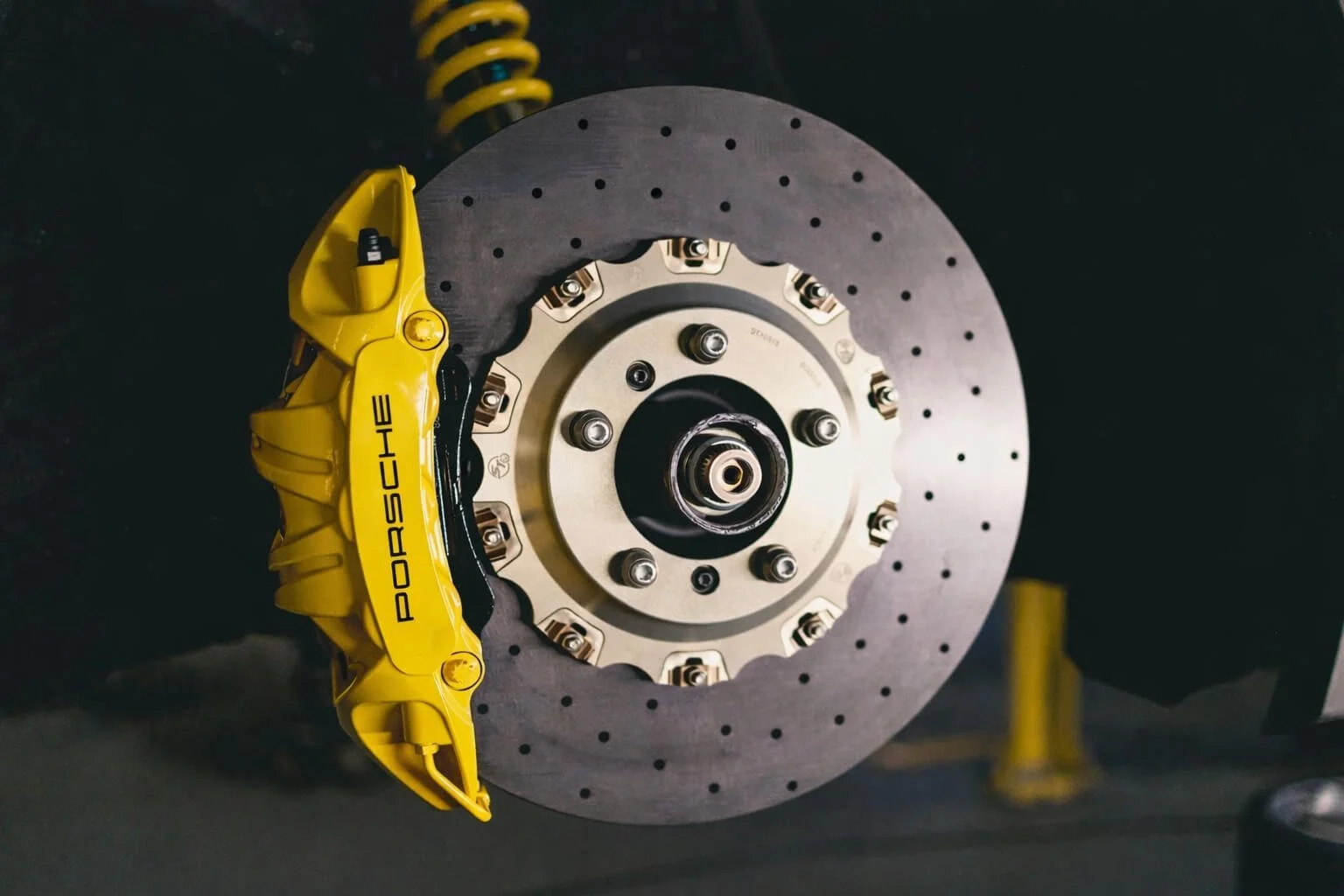
Carbon ceramic brakes—officially known by Porsche as Porsche Ceramic Composite Brakes (PCCB)—are made from a carbon-fiber-reinforced silicon carbide material. Unlike traditional cast iron rotors, these rotors are manufactured through a complex high-temperature process that results in an extremely hard, heat-resistant braking surface.
Porsche carbon ceramic brakes are typically exclusively paired with large, multi-piston yellow calipers and specialized brake pads designed to work within a wide temperature range. You’ll find PCCB systems available on many high-performance Porsche models, including the 911, Cayman GT4, Boxster Spyder, Panamera, Cayenne Turbo, and Taycan.
Key Benefits of Carbon Ceramic Brakes
Porsche carbon ceramic brakes offer several advantages over conventional steel braking systems, especially for performance-oriented drivers.
Significant Weight Reduction
One of the biggest advantages of carbon ceramic brakes is reduced unsprung weight. PCCB rotors can weigh up to 50% less than comparable cast iron rotors. This improves suspension response, steering precision, and overall handling—benefits you can feel even during spirited street driving.
Exceptional Heat Resistance
Carbon ceramic brakes are highly resistant to brake fade. They maintain consistent braking performance under repeated hard stops and extreme temperatures, which is why they’re favored for track use and high-speed driving.
Long Service Life
In ideal conditions, Porsche carbon ceramic brakes can last dramatically longer than traditional brakes. They resist corrosion, do not warp like steel rotors, and wear at a much slower rate when driven properly.
Reduced Brake Dust
Compared to steel systems, PCCB setups produce far less brake dust. This helps keep wheels cleaner and reduces long-term cosmetic wear—an underrated benefit for daily-driven Porsches.
Street-Driven Porsche Carbon Ceramic Brakes
For Porsche owners who primarily drive on public roads, real-world data shows that carbon ceramic brakes can last 100,000 to 150,000 miles, and in some cases even longer.
Independent Porsche specialists and long-term owners regularly report PCCB rotors still measuring within factory specifications after a decade of normal driving. Porsche itself has stated that under “normal road use,” carbon ceramic brakes may last the lifetime of the vehicle.
However, longevity depends heavily on driving style, environment, and maintenance habits.
Factors that extend lifespan include:
Smooth, progressive braking
Highway driving versus stop-and-go traffic
Proper pad selection
Avoiding aggressive cold braking
Keeping the braking system clean and properly inspected
In real-world street use, it’s often the brake pads that require replacement first, not the rotors. Pads may need service every 30,000–60,000 miles depending on driving habits.
Urban Driving and Wear Considerations
Short trips, frequent hard stops, and heavy city driving can increase wear on carbon ceramic brakes—especially if the system never reaches optimal operating temperature. While PCCB systems perform well when cold, repeated low-temperature braking can increase pad wear and, in rare cases, cause surface damage to the rotors if improper pads are used.
This is why proper inspection by an experienced Porsche specialist is critical.
Porsche Carbon Ceramic Brakes for Track Use
Track use is where carbon ceramic brakes truly shine—but also where longevity changes dramatically.
Performance on Track
On the track, Porsche carbon ceramic brakes offer:
Outstanding resistance to fade
Consistent pedal feel during long sessions
Reduced heat transfer to hubs and suspension components
For high-speed track days, PCCB systems provide confidence and performance that traditional steel brakes struggle to match without frequent rotor and pad replacements.
Track Wear Reality
That said, track driving introduces extreme heat cycles and abrasive wear. Real-world track data shows that:
Pads may wear rapidly, sometimes in a single weekend
Rotor lifespan can drop to 30,000–60,000 miles depending on frequency and driving intensity
Improper bedding or incorrect pad compounds can permanently damage rotors
Many dedicated track drivers choose to swap to steel brake setups for track days and preserve their Porsche carbon ceramic brakes for street use. This strategy maximizes longevity and reduces the risk of costly rotor damage.
Porsche Carbon Ceramic Brakes vs. Steel Brakes
Although the upfront cost of Porsche carbon ceramic brakes is significantly higher than steel brakes, real-world cost analysis often tells a different story over long-term ownership.
Steel brake rotors typically require replacement every 30,000–60,000 miles, depending on driving habits. Carbon ceramic rotors, by contrast, may never need replacement during ownership if properly maintained.
For long-term Porsche owners, especially those driving high-performance models like the 911, Turbo, GT, or Panamera, carbon ceramic brakes can be more cost-effective over the life of the vehicle.
Caring for Porsche Carbon Ceramic Brakes
To get the most life out of your Porsche carbon ceramic brakes:
Use Porsche-approved or specialist-recommended brake pads
Avoid washing wheels immediately after aggressive driving
Allow brakes to cool naturally after spirited use
Have thickness and surface condition checked during routine service
Never resurface carbon ceramic rotors
An experienced Porsche technician can identify early signs of wear or surface damage long before replacement becomes necessary.
Speedhaus Automotive: The Independent Porsche Specialists in Newbury Park
At Speedhaus Automotive in Newbury Park, we specialize in repairing and upgrading Porsche vehicles. As independent Porsche specialists, we provide expert diagnostics, maintenance, repairs, and performance upgrades for all Porsche models, from daily-driven Cayennes and Macans to high-performance 911 and GT cars.
Our team has hands-on experience servicing Porsche carbon ceramic brakes, including inspections, pad replacement, track-use consultations, and performance-focused brake solutions. We understand the nuances of PCCB systems and help Porsche owners protect their investment while maximizing performance and safety.

Are Porsche Carbon Ceramic Brakes Worth It?
In real-world driving, Porsche carbon ceramic brakes can last well over 100,000 miles when properly maintained and driven primarily on the street. They offer significant performance advantages, reduced weight, and impressive longevity compared to traditional steel brakes.
For track use, they deliver exceptional performance but require careful management to avoid accelerated wear. Whether you drive your Porsche daily, enjoy spirited canyon runs, or participate in occasional track events, understanding how carbon ceramic brakes behave in real-world conditions is essential.
If you’re a Porsche owner in Ventura County and have questions about carbon ceramic brakes, brake service, or performance upgrades, we invite you to contact us here at Speedhaus Automotive in Newbury Park. Our experienced team is here to help you protect your investment and get the most out of your Porsche—on the street and beyond.
FAQs
-
Yes, Porsche carbon ceramic brakes work very well for daily driving and offer benefits like reduced brake dust and corrosion resistance. They perform reliably when cold and provide smooth, consistent braking in everyday conditions.
-
While the upfront cost is high, the long lifespan of carbon ceramic brakes can make them cost-effective over time. Fewer rotor replacements and improved performance often offset the initial investment for long-term owners.
-
Yes, carbon ceramic brakes generate significantly less brake dust compared to steel brakes. This helps keep wheels cleaner and reduces long-term cosmetic wear.
-
Brake pad life varies by driving style, but pads typically last between 30,000 and 60,000 miles in street-driven Porsche vehicles. Track use can shorten pad life considerably.